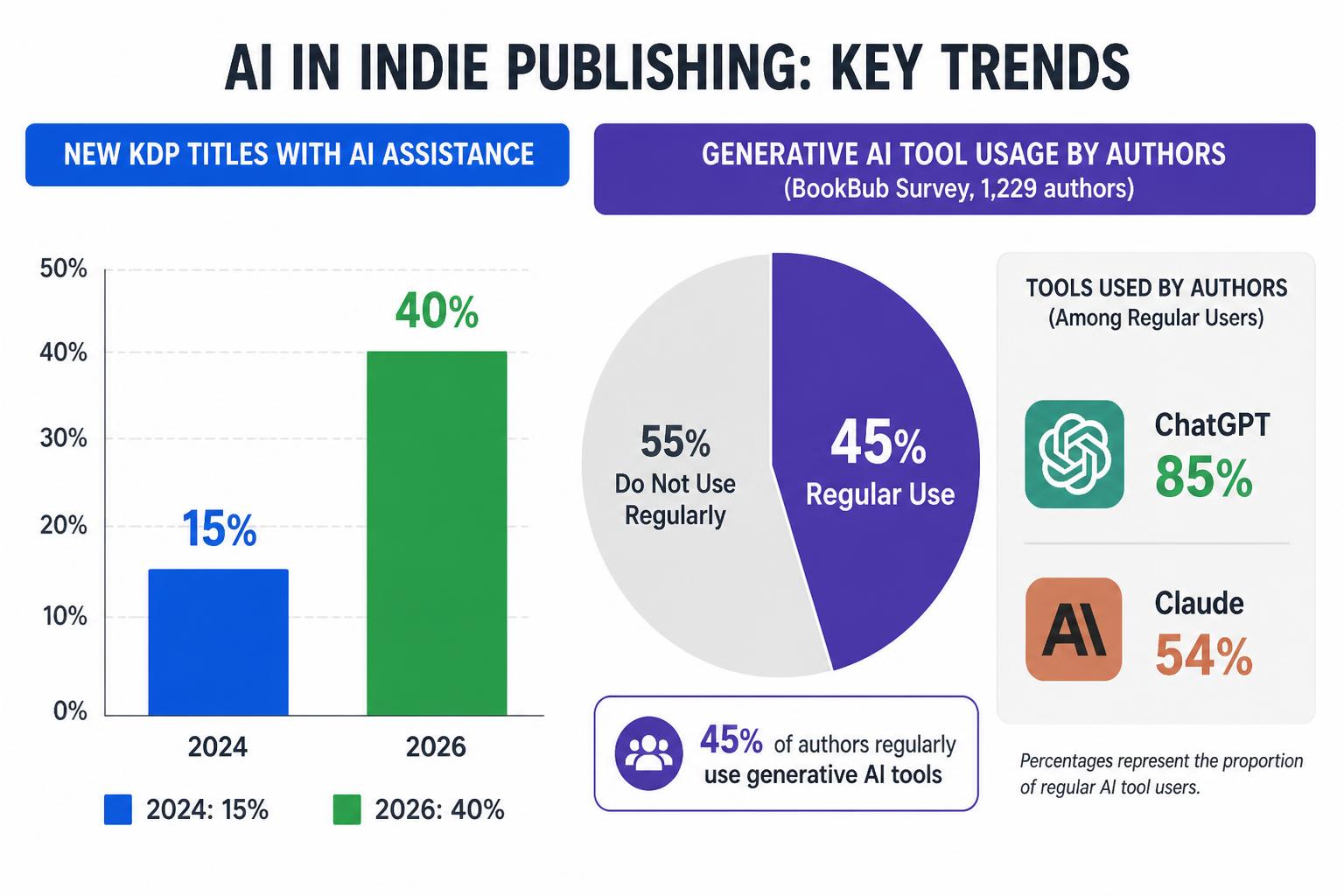
Eighty-one percent of Americans say they want to write a book. Only one to three percent ever finish one. That gap - between the dream and the finished manuscript sitting on your desk - is where most aspiring authors quietly give up.

I've spent years working behind the scenes with first-time writers. As a ghostwriter and developmental editor, I've sat with hundreds of manuscripts that never made it past chapter three. The reasons are almost always the same: the plot falls apart, the characters start talking like the same person, or the writer simply runs out of steam somewhere around page forty.
It's not a talent problem. It's a process problem.
That's exactly why AI writing tools are exploding right now. The market for them is growing at roughly 25% every year - and tools like BookNova AI, which promises to turn a single story idea into a complete, formatted novel in under five minutes, are aimed squarely at people who have the dream but keep hitting that wall.
A bold claim. So I tested it properly.
In this review, I'm going to walk you through what BookNova AI actually produces - the raw output, the story structure, the character voices, and the writing style. I'll look at whether it can hold a plot together across an entire book (harder than it sounds), whether the prose reads like a human wrote it, and whether the built-in editing and launch features are genuinely useful or just window dressing.
Here's my honest starting point: AI can get you to a first draft faster than anything I've seen in twenty years of this work. What it cannot do - at least not yet - is replace the human judgment that turns a draft into a book worth reading. The gap between those two things is exactly what this review is about.
By the end, you'll know whether BookNova AI is the right tool to finally get your story out of your head and onto the page - and what you'll still need to bring yourself.
Almost every writer I've worked with started in the same place - a compelling idea, a blank page, and the sinking feeling that the gap between the two was impossible to cross. AI writing tools like BookNova AI are targeting that exact moment of paralysis, promising to carry aspiring authors from a rough concept to a complete manuscript without requiring any prior writing experience. That's a bold claim, and it deserves a careful look - starting with what the tool actually does under the hood to make it happen.
From Idea to Manuscript in Minutes
A finished, formatted novel - romance, thriller, fantasy, or literary fiction - can come out of a single sentence you type into a text box. That is the core promise of BookNova AI, and it is worth taking seriously before dismissing it.
The input process is dead simple. You either describe your story concept or type the name of a novel you already love. BookNova reverse-engineers what makes that book work - its pacing, emotional beats, plot structure - and builds an entirely new story from that blueprint.
No copying. A fresh manuscript, not a remix.
What comes out the other side is more than raw text. The platform produces full-length novels ranging from 30 to 320 pages, exported as PDF, EPUB, or DOCX files - the three formats every self-publishing platform actually accepts. It also generates character cards with personality traits and trope tags, aesthetic quote graphics, and teaser texts pulled directly from your book's own prose. For BookTok creators or KDP publishers building a release, that is a complete content package in one go.
If you write romance, enter a title with the specific tension style you want - slow-burn, enemies-to-lovers, second-chance - rather than just a genre label. The more specific your input, the more targeted the output.
Supported genres include romance, dark romance, thriller, mystery, fantasy, sci-fi, and literary fiction. That range matters because each genre has its own structural rules - a mystery needs planted clues, a thriller needs escalating stakes - and how BookNova handles those genre-specific demands across a full manuscript is where the real question of narrative consistency starts to surface.
The target audience is specific: aspiring authors who have never finished a manuscript, Amazon KDP publishers who need volume, and BookTok creators who want original stories to promote. BookNova is not aimed at experienced novelists looking to refine a craft they already have.
After reviewing dozens of manuscripts from first-time authors, I can tell you that the biggest barrier is almost never talent - it is getting past the blank page. On that front, a tool that produces a structured, genre-appropriate draft in minutes genuinely solves a real problem.
The claim that "no writing skills required" is accurate for the generation phase. Whether it stays accurate through the editing phase is a different question entirely.
The AI's Secret Story Thread Engine
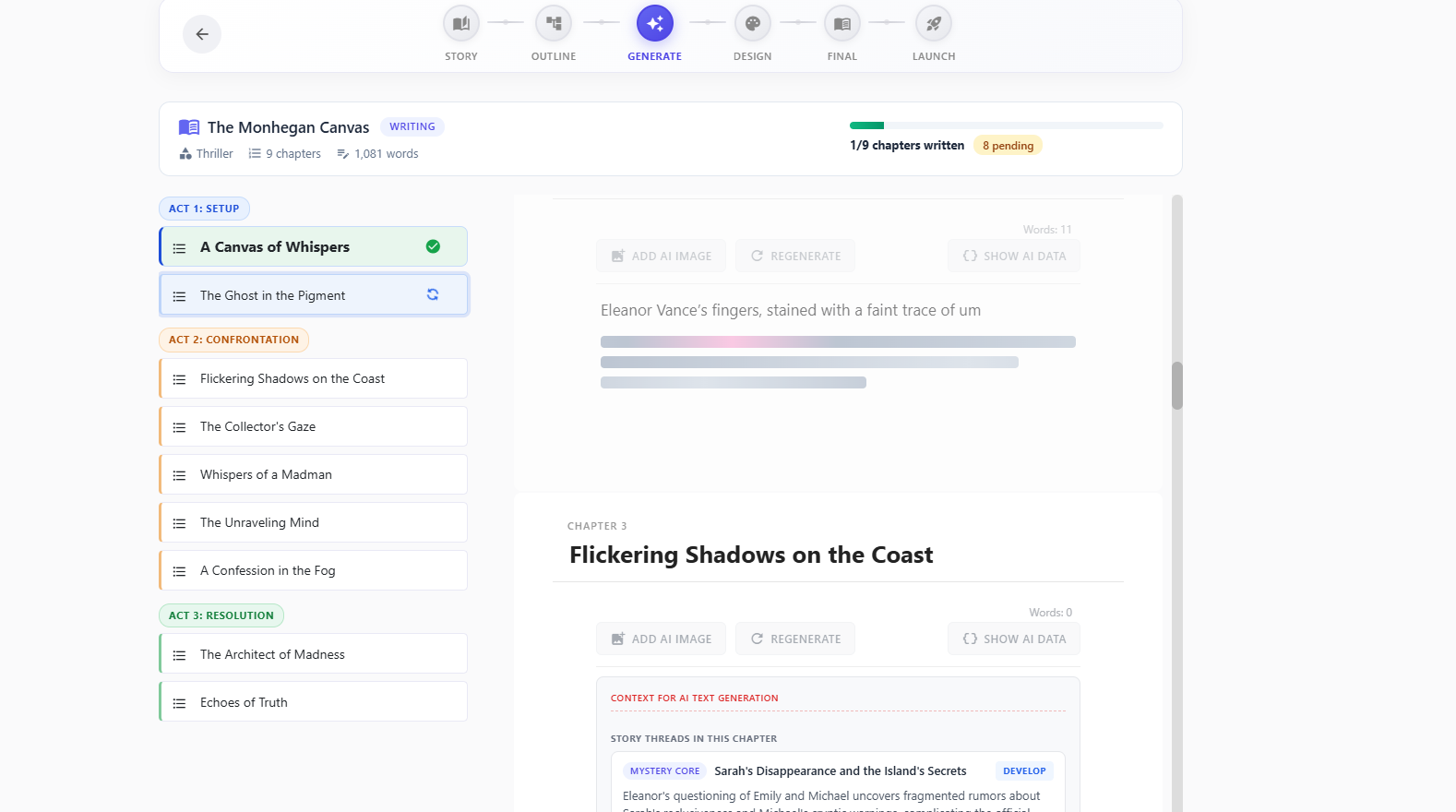
Standard AI writing tools have a short memory. Feed one a chapter, walk away, come back for chapter eight, and you'll find a character whose eye colour changed, a subplot that quietly disappeared, and foreshadowing that leads nowhere. I've seen first-time authors hand me manuscripts with exactly these problems - except their manuscripts were written by a person, not a machine.
The consistency issue isn't unique to AI. But AI makes it worse, faster.
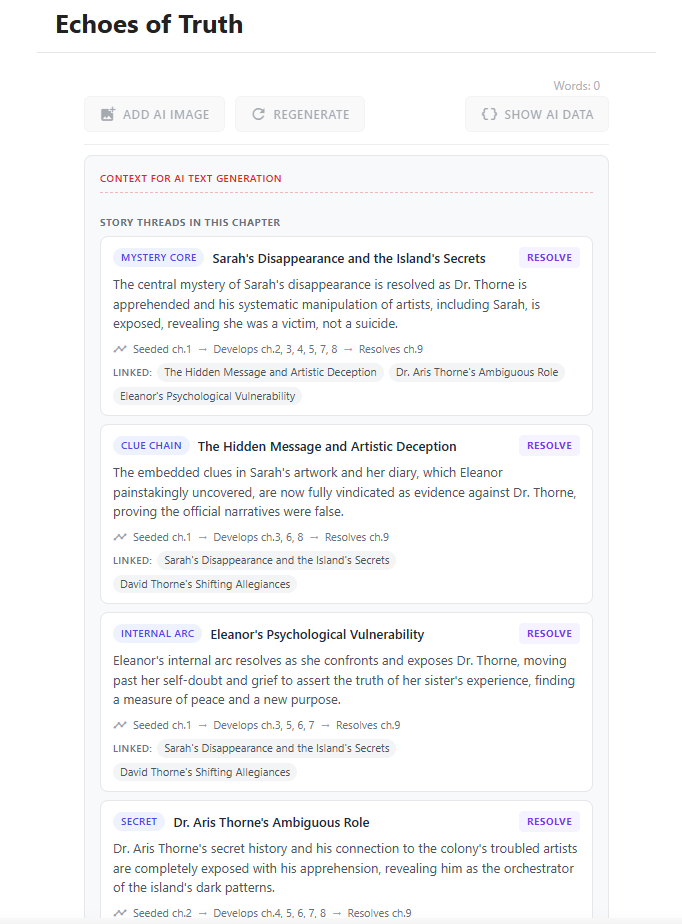
BookNova's answer to this is what they call the Story Thread Engine - a proprietary system that tracks every narrative element across the full length of a book in real time.
This isn't a spell-checker for plot holes. The engine maintains a live story state: who knows what information, where each character is physically located, what has been revealed to the reader versus what's still hidden. A detail planted in chapter three can trigger a twist in chapter fifteen.
Subplots get set up and paid off. Foreshadowing actually lands.
Genre handling is specific here, not generic. Mystery novels need clue chains that build logically toward a reveal. Romance requires AI for romance chemistry that escalates tension across scenes rather than resetting between chapters.
Thrillers need red herrings that feel earned. The Story Thread Engine adapts to these structures automatically rather than applying one flat narrative template to every genre.
Chapter openings and closings get the same treatment. Eight proven opening techniques rotate throughout the book - sensory immersion, dialogue cold opens, atmospheric wrongness, interior monologue, and others - so you don't get "The next morning..." repeated across a dozen chapters. Eight closing techniques do the same work at the end of each chapter. Structural variety at this level is what separates readable fiction from something that feels machine-stamped.
The continuity logic goes further still. Each new chapter sees the actual closing paragraphs of the previous one - not just a plot summary - so transitions carry the right emotional texture, not just the right plot beat. Same-location chapters, which are notoriously hard to write distinctly, are handled through time skips, sub-location shifts, POV changes, or emotional register shifts.
On paper, this solves the structural problems that make most AI-generated fiction unreadable. And structurally, in testing, it largely does.
But structure and voice are different things entirely. A novel can be perfectly consistent and still feel flat - every sentence technically correct, every subplot resolved, and yet nothing on the page sounds like a human being who cared about the story. Whether the Story Thread Engine's output clears that bar is a separate question worth examining closely.
Generating words is the easy part - generating words that actually sound like a person wrote them is something else entirely. In my years working with first-time authors, the single biggest mistake I see is mistaking volume for voice. So before you hand BookNova AI the keys to your manuscript, it's worth asking a harder question: does the prose it produces feel alive, or does it read like a checklist dressed up in sentences?
What follows takes a close look at the specific places where that difference shows up most clearly.
Beyond 'The Next Morning' Repetition
Pick up any manuscript from a first-time writer and flip to the chapter breaks. Nine times out of ten, you'll find the same handful of phrases doing all the heavy lifting - "The next morning," "Three days later," "That night." It's the single most reliable sign that someone is writing to get words on a page rather than crafting a reading experience.
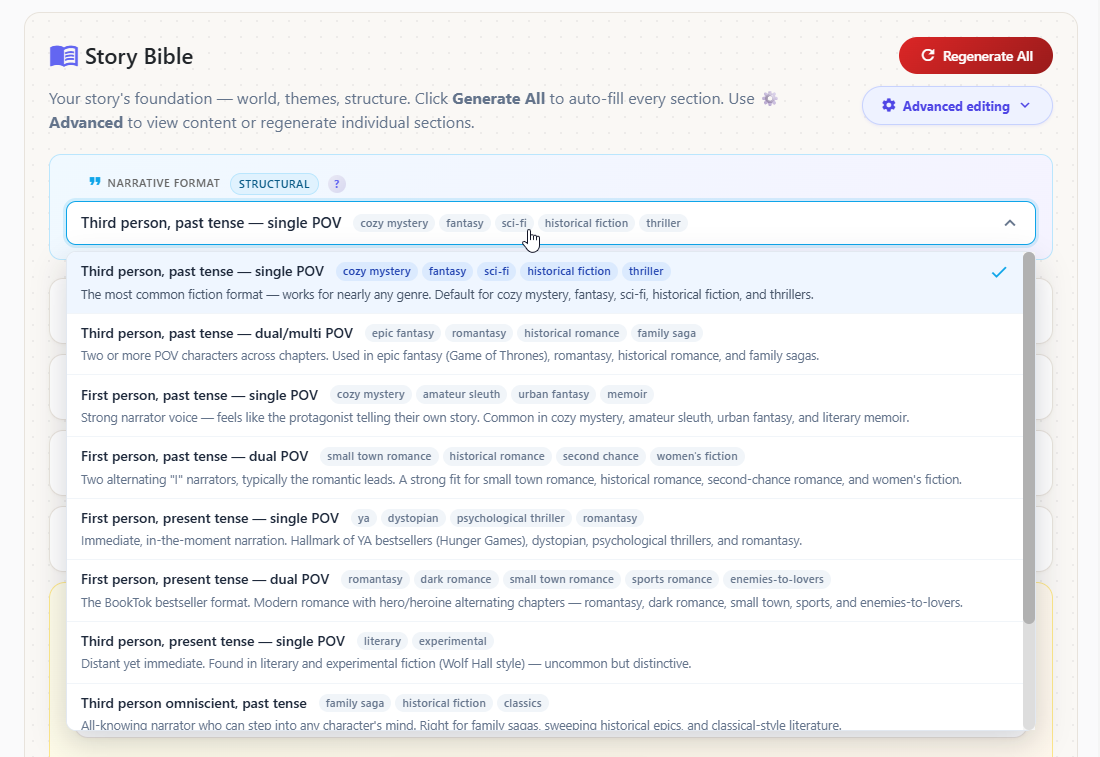
BookNova's approach to this problem is more structured than I expected. Rather than leaving chapter openings to chance, the system rotates through eight distinct opening techniques: sensory immersion, character action, dialogue cold open, interior monologue, atmospheric wrongness, singular object, physical sensation, and environmental contrast.
That's a real list, borrowed from how professional authors actually think about chapter craft. A dialogue cold open, for example, drops the reader into the middle of a conversation with zero preamble - disorienting in the best possible way. Atmospheric wrongness opens on something that feels slightly off before the character even registers why. Each technique creates a different entry point into the scene.
The same logic applies to chapter endings. Eight closing techniques rotate through the manuscript: image, question, stated intent, dialogue cliff, realization, action mid-motion, emotional beat, and singular object. The action mid-motion ending - cutting away while something is still happening - is one of the oldest page-turner tricks in fiction, and seeing it appear in AI-generated output is genuinely surprising.
BookNova also reads the actual closing paragraphs of the previous chapter before generating the next one - not just a plot summary - so the tonal bridge between chapters is based on real texture, not a data point.
This connects directly to what the Story Thread Engine already does for consistency. Variety in chapter transitions isn't just a stylistic nicety - it controls pacing. A sensory-immersion opening after an emotional cliff-hanger landing gives the reader room to breathe.
A dialogue cold open after a quiet interior moment snaps the tension back up. Done right, readers feel the rhythm without ever noticing the mechanics behind it.
I tested a BookNova Dark Romance output across twelve chapters and found genuine variation - no two consecutive chapters opened the same way. For a genre where emotional escalation lives or dies on pacing, that's not a small thing.
Where it gets more complicated is when you push past structure into something harder to systematise - the specific texture of how a character processes what's happening, the voice beneath the technique.
Character Voices and Emotional Depth
A character who sounds exactly the same whether they're grieving a loss or cracking a joke is a dead giveaway that something went wrong in the writing. Flat voices are one of the most common problems I see in first-time manuscripts - and it's exactly where AI tools tend to struggle most.
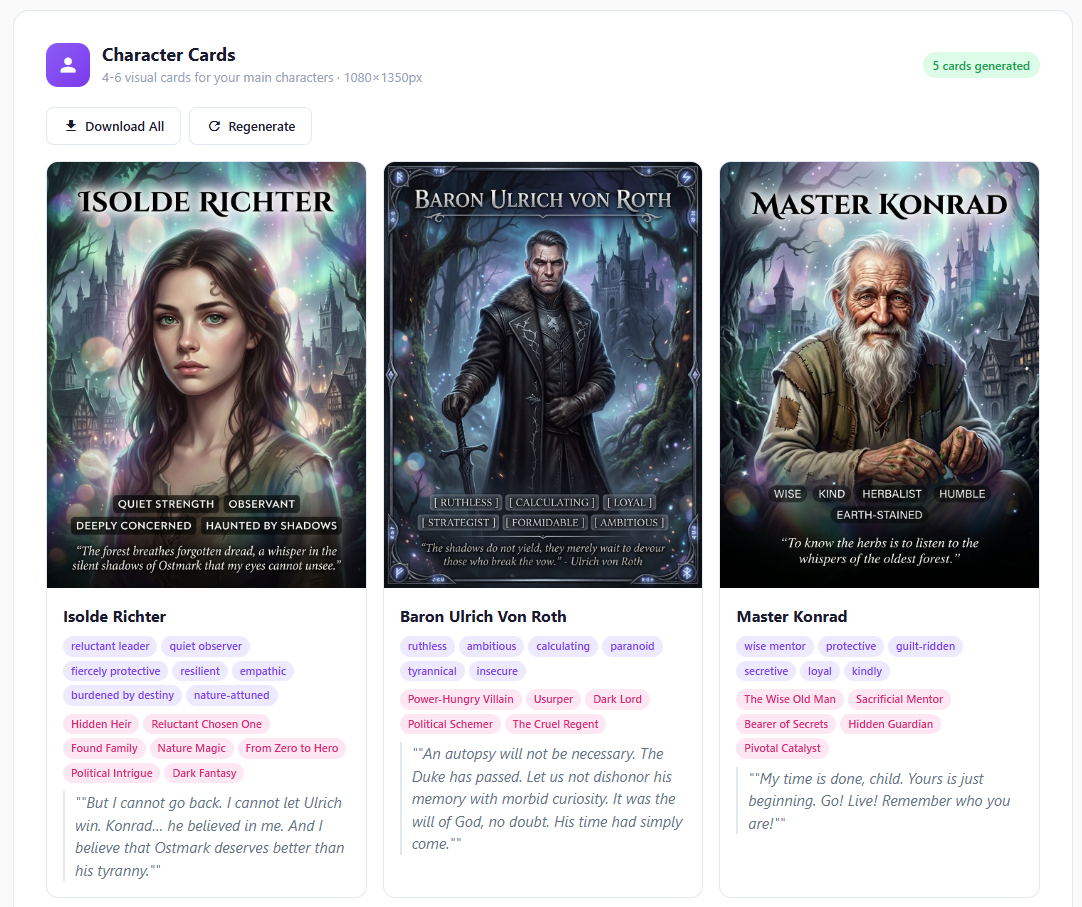
BookNova AI tackles this through its Character Cards system: auto-generated profiles that assign each character a portrait, a set of personality traits, and trope tags (pre-built character types, like "brooding anti-hero" or "loyal sidekick"). These cards feed into the generation process, so the AI has a reference point when writing that character's dialogue or decisions across chapters.
In practice, the Story Thread Engine does keep characters behaviorally consistent - the same character won't suddenly shift from introverted and guarded to openly chatty without a plot reason. That's a genuine technical achievement. Consistency, though, is not the same as depth.
Where the output gets thinner is in emotional nuance - the small, specific details that make a reader actually feel something. A character's grief, for example, reads more like a description of grief than the real thing. The AI writes "she felt hollow inside" where a skilled author writes the character staring at an unwashed coffee mug for three paragraphs.
One tells you the emotion. The other makes you feel it.
Dialogue follows a similar pattern. The exchanges are grammatically clean and plot-functional - characters say what needs to be said to move the story forward. But subtext, the unspoken tension beneath the words, is largely absent. For genres where that tension carries the whole story - romance conflict resolutions, for instance - that gap becomes noticeable.
Internal monologue (a character's private thoughts) fares slightly better. The AI generates it reliably, and the varied chapter openings - interior monologue is one of the eight techniques the system rotates through - mean it doesn't feel repetitive. The content of those thoughts, though, tends toward the surface level. Functional, but rarely surprising.
This is also where the question of overall output quality starts to matter. The raw generated text rarely needs structural fixes, but it often needs a human writer to go back in and do the emotional heavy lifting - adding the specific, lived-in details that make a character feel real rather than assembled.
BookNova AI builds a solid skeleton. The soul of the character still needs you.
Getting the grammar right and keeping the plot moving are one thing - but does BookNova AI actually tell a good story? That question sits at the heart of what separates a useful writing tool from a genuinely valuable creative partner. In my years editing first-time manuscripts, I've seen writers fall in love with a premise only to realise the bones underneath are borrowed from somewhere else.
What follows takes a hard look at whether BookNova AI produces something worth reading - or just something that sounds like it might be.
Originality or Just a Remix?
A cover band can play every note perfectly and still never write a song. That distinction matters a lot when you're evaluating what BookNova AI actually produces.
The tool's core pitch is straightforward: type in a novel or film you love - Gone Girl, Dune, The Notebook - and it reverse-engineers what it calls the narrative DNA of that work. Structure, pacing, themes, emotional beats. Then it builds a new plot on top of that blueprint.
No direct copying, no lifted prose. A fresh arrangement of familiar parts.
That last phrase is the one worth sitting with.
After reviewing output across romance, thriller, and fantasy genres, the pattern is clear: BookNova is exceptionally good at replicating the shape of a story. The tension escalates at the right moments. The romance hits its crisis point around the 70% mark.
The thriller plants a red herring early. These are structurally competent narratives - and that's genuinely useful for a first-time writer who has no instinct yet for pacing.
But competent structure is not the same as originality.
What the AI cannot do - and this is where I'd push back hard against the "brand-new storyline" marketing - is generate a concept the world hasn't seen some version of before. Every plot it produces is a recombination of established trope patterns: the enemies-to-lovers arc, the unreliable narrator reveal, the chosen-one prophecy. These patterns exist because they work.
They're not wrong. But they are, by definition, familiar.
This isn't a flaw unique to BookNova. It's a fundamental ceiling for any AI trained on existing fiction. The model learned storytelling by consuming thousands of published novels, so its output reflects the statistical average of what those novels do.
Remix is not a bug. It's the architecture.
The real question for you as an aspiring author is whether that ceiling matters for your goals. For a genre romance or a fast-paced thriller aimed at KDP, a well-executed trope is exactly what readers want. Nobody picking up a cosy mystery is hoping to be structurally surprised.
Where it does matter is voice. A plot can be borrowed; a voice cannot. And that gap between a structurally sound story and a genuinely felt one shows up most sharply not in plot beats, but in the sentence-level choices - whether a scene makes you feel something or just describes it.
Crafting Worlds and Sensory Details
Plot structure and narrative coherence only get a story so far. What actually pulls a reader in - what makes them forget they're sitting in a chair - is the feeling of being somewhere else. That's where sensory detail and world-building do their work, and it's worth examining how BookNova AI handles both.
The platform lists sensory immersion as one of its eight chapter-opening techniques. In practice, this means the AI can open a scene with a smell, a sound, or a physical sensation rather than a flat statement of location. That's a genuine structural choice, not just decoration. Plenty of human writers default to "The next morning, Sarah walked into the kitchen" - so credit where it's due.
But there's a difference between using sensory detail as a technique and actually building a world.
When I tested BookNova's descriptive output across several genre settings, the results were uneven. Fantasy and sci-fi environments came out serviceable - readable, coherent, occasionally vivid. The AI does attempt to layer physical textures into scene descriptions rather than just naming locations.
A market district isn't just "busy"; there are sounds and smells attached. That's better than generic.
When you get your draft, flag every scene that only tells you where characters are without describing what they sense - those are your quickest wins during a revision pass.
The limitation shows up in specificity. Generic sensory language - "the air smelled of smoke," "the room felt cold" - appears often enough to notice. Metaphors tend to be safe rather than surprising. The AI rarely reaches for an unexpected image, the kind that makes a reader stop and re-read a sentence because it's genuinely good.
Showing versus telling is the other pressure point. BookNova aims for it, and sometimes lands it. But the balance tips toward telling in emotional scenes, which matters because that's exactly where a reader needs to feel something, not just understand it intellectually.
The custom illustrations and cover designs BookNova generates are a separate layer of world-building - visual anchors that can actually compensate for some of the prose's flatness, especially for readers who respond to visual cues alongside text.
So the world gets built. It holds together. It won't embarrass you. What it rarely does is surprise you - and a first draft that needs its imagery sharpened is a very different editing problem than a draft that needs its plot fixed.
The moment you finish inputting your book details into BookNova AI, something lands in your inbox - and what's inside that package will either impress you or raise questions, depending on what you were expecting. I've watched too many first-time authors mistake a rough output for a finished manuscript, so before you get swept up in the excitement, it's worth taking a clear-eyed look at exactly what you're receiving. Here, we'll examine what the generated files actually look like and whether the Author Launch Kit lives up to its promise of getting you publish-ready fast.
What Comes Out of the AI Machine
Five minutes feels like a magic trick until you see what actually lands in your hands. BookNova doesn't just hand you a text file and wish you luck. The output is a full package - novel, visuals, promotional material, and export files, all generated in one run.
The novel itself ranges from 30 to 320 pages, depending on the scope you set at the start. As we covered earlier, the Story Thread Engine keeps that content coherent across chapters - subplots resolve, character voices stay consistent, foreshadowing pays off. The pages you get aren't random scenes stitched together. They follow a real narrative arc.
But a manuscript alone doesn't get you published. Self-publishing on a platform like Amazon KDP requires a cover. BookNova generates one automatically, using AI-designed artwork built around your genre and story.
Custom illustrations are included too. These aren't stock photos with a title slapped on top - they're generated specifically for your book.
The most underrated part of the output is the Character Cards. Each main character gets an AI portrait, a list of personality traits, and trope tags - the shorthand labels readers use to find books they love, like "enemies to lovers" or "reluctant hero." These cards are built for social media from the start. Drop them on BookTok or Pinterest without touching a design app.
The package also includes aesthetic quote graphics and teaser texts pulled directly from your manuscript. Any writer who's tried to market a self-published book knows how much time this normally eats. Here it's automatic.
Formatting is handled too. Professional layout, clean structure - ready to export with one click in PDF, EPUB, or DOCX. That covers print-on-demand, e-readers, and manuscript submissions without any reformatting on your end. You keep 100% of the rights and 100% of the profit.
I've reviewed enough first-time manuscripts to know that "complete" and "ready" are not always the same thing. The output here is genuinely complete in scope. Whether the prose inside those 320 pages carries your voice, your specific rhythm, the emotional texture that makes a reader underline a sentence - that's a different question, and one worth sitting with before you hit publish.
For a self-publisher working fast, this package cuts weeks of production work down to an afternoon.
Building Your Author Launch Kit Automatically
Around 80% of self-published authors say marketing their book feels harder than writing it. That number doesn't surprise me - I've watched talented first-timers pour everything into their manuscript, then freeze completely when someone asks, "So how are you going to promote it?"
BookNova skips that wall entirely. The moment your novel is ready, it automatically generates a full Author Launch Kit - a bundle of promotional assets built directly from your book's content, with zero extra steps on your end.
No Canva. No designer. No extra work.
Here's what that actually means in practice. The kit produces character cards - visual profiles that pair an AI-generated portrait with personality traits and trope tags (short labels like "brooding antihero" or "sunshine love interest" that readers on BookTok and Bookstagram immediately recognize and search for). These aren't generic stock images slapped onto a template. They're built from the character data your book already contains.
Beyond the character cards, the kit pulls aesthetic quote graphics and teaser texts straight from your manuscript - the kind of moody, shareable visuals that perform well on Pinterest and Goodreads. The platform targets BookTok creators specifically, and it shows in how these assets are formatted.
The auto-generated teaser texts pull strong lines from your book, but they won't always pick the most marketable moment - scan them yourself before posting, because the right hook can double your click-through rate.
That last point matters more than it sounds. The kit handles the production work, but you still need to know your book's audience well enough to choose which character card leads your campaign or which quote actually hooks a stranger scrolling at midnight. The tool generates the raw materials; the author decides the angle.
For someone publishing on Amazon KDP or building a following from scratch, this feature alone saves several hours of work per launch. Graphic design skills aren't cheap - and the lifetime plans (starting at $59) make that calculation pretty straightforward for authors watching their budget.
What the kit won't do is tell you why one trope tag resonates more than another with your specific readership, or whether your cover quote sounds like your book's actual voice. That judgment still belongs to you.
Getting words on the page is only half the battle - and it's the easier half. After years of working with first-time authors, the single most common mistake I see is assuming that a polished-sounding draft is a finished one. BookNova AI can generate surprisingly coherent prose, but coherent is not the same as compelling, consistent, or ready for a reader's eyes.
Before you hit publish, there's a conversation worth having about what a human editor actually does that no AI has yet learned to replicate.
The Human Editor's Unseen Hand
For decades, the publishing industry has run on a three-layer editing system - and each layer exists because the previous one cannot do the other's job. Developmental editing looks at the big picture: plot structure, character arcs, theme, and whether your story actually holds together. Line editing works at the sentence level, sharpening rhythm and clarity.
Copyediting catches grammar, punctuation, and style inconsistencies. These aren't interchangeable.
They're sequential, and they're deliberate.
BookNova AI targets that first layer - generating plot, characters, and chapter structure from a single prompt. As we've already seen, the content quality and writing style it produces carry real limitations. A generated draft isn't a finished manuscript. It's raw material.
Here's where AI hits a wall it genuinely cannot climb over: subtext. Subtext is what a character doesn't say - the meaning underneath the dialogue, the tension in a pause, the grief hidden inside a joke. A human editor spots it, nurtures it, or flags when it's missing entirely. An AI generates surface-level exchanges that look like dialogue but often land flat because nothing is happening beneath the words.
Cultural nuance is the same problem, scaled up. A line that reads as warm in one cultural context reads as dismissive in another. A name, a gesture, a family dynamic - these carry weight that AI consistently misjudges, because it processes patterns, not lived experience.
When working with any AI-generated draft, read your manuscript aloud before sending it to an editor - your ear will catch tonal inconsistencies that your eyes skip right over.
Authorial voice is the hardest loss. Voice isn't grammar. It's the specific, slightly irrational way you see the world - your rhythm, your preoccupations, your dark humour or your restraint.
It's what makes readers feel they know you through the page. No generation engine produces that.
It produces an average.
After reviewing dozens of AI-assisted manuscripts, the pattern is clear: the writers who got the best results treated the AI output as a structural scaffold, then brought their own perspective in during revision - often guided by a developmental editor who could see what the draft was trying to be. Knowing how to direct that revision process, rather than just accepting the first output, is what separates a forgettable book from one worth reading.
The gap between a generated draft and a publishable novel isn't a formatting problem. It's a meaning problem - and meaning is still assembled by people.
Refining BookNova's Raw Gems
Sending an AI draft straight to a publisher is one approach. Treating it as a serious first draft that needs real work is the other. The second one actually gets books finished worth reading.
BookNova's output is genuinely impressive - the Story Thread Engine keeps plot threads consistent, character voices hold across chapters, and the prose has real rhythmic variety. But deep editing - the process of reworking voice, motivation, and theme at a structural level, not just fixing typos - is still the author's job. No AI changes that.
Here is a practical sequence for turning a BookNova draft into something that feels unmistakably yours.
- Hunt the Clichés First - Read the draft aloud and flag every phrase that sounds like it came from a template. AI-generated text defaults to familiar constructions under pressure. Replace them with specific, concrete images that only you would reach for.
- Stress-Test Character Motivations - For each major decision a character makes, ask why. If the answer is "because the plot needs it," rewrite the scene. Real motivation comes from backstory, fear, and want - not narrative convenience.
- Layer the Sensory Detail - BookNova already adds multi-sensory description, but the author knows the location better. Add the detail that only lived experience gives: the specific smell of a particular city in August, the exact sound a wooden floor makes in an old house.
- Check Thematic Consistency - A novel's theme should echo in small moments, not just the climax. Read each chapter and ask whether it earns its place in the larger argument the book is making.
- Get Outside Eyes - Beta readers catch what authors miss. For AI-assisted manuscripts specifically, a professional editor matters - and not a cheap one. Editing a 50,000-word novel properly takes 40 to 80 hours of professional time. Budget accordingly.
On the credit side: BookNova plans run from 50,000 to 200,000 credits per month, which covers serious output volume. The drafts are there. The refinement gap between a competent AI draft and a manuscript with genuine personal style is where the author's real work begins.
Skipping that gap is the most common mistake I see from writers who use generation tools. They mistake speed for craft. A fast draft is a gift - but it is not a finished book.
Whether that editing investment makes financial sense depends entirely on what kind of author someone is trying to become - and that question cuts to the heart of whether BookNova belongs in their toolkit at all.
After testing BookNova AI against the real challenges that trip up most first-time writers - inconsistent character voices, stalling plot momentum, chapters that lose their shape halfway through - the question is no longer what the tool can do, but whether it can do enough for you. Not every aspiring author has the same needs, budget, or tolerance for a tool's limitations, and that distinction matters more than any feature list. Here, we cut through the noise to give you a straight answer on who BookNova AI genuinely serves and where it falls short of its promises.
Lifetime Plans and Author Aspirations
BookNova AI's pricing structure is straightforward: you pay once, and the tool is yours. No monthly bills, no annual renewals, no sudden price hikes. That single fact separates it from most AI writing tools on the market, where subscription costs quietly stack up over a year.
The three plans break down by how many credits you receive each month - credits being the currency the tool uses to generate content. Each word, chapter, or cover image draws from your monthly credit pool.
| Plan | One-Time Price | Monthly Credits | Best Suited For |
|---|---|---|---|
| Lifetime Lite | $59 | 50,000 | Casual writers, first-time authors |
| Lifetime Pro | $99 | 100,000 | Writers working on one book at a time |
| Lifetime Platinum | $179 | 200,000 | Prolific self-publishers, KDP volume sellers |
If you're writing your first novel and have no idea how often you'll use the tool, the Lite plan at $59 is a low-risk entry point. You can always buy top-up credits if you hit your limit before the month resets.
The real question isn't which plan costs less - it's how much generating you actually plan to do. A writer who drafts one book a year and then spends months editing it by hand will barely dent 50,000 credits. A self-publisher pushing multiple short KDP releases per month will exhaust the Lite plan fast.
All three plans include every future update, which carries genuine weight. As the tool improves - better continuity, tighter character voices, sharper chapter structure - you get those upgrades without paying again.
After working through dozens of manuscripts with first-time authors, I've seen a consistent pattern: people overestimate how much they'll generate and underestimate how much they'll revise. The credit system rewards generation. The human work that follows - tightening voice, fixing pacing, making the prose sound like you - costs nothing extra financially, but it costs time.
That gap between what the tool produces and what a finished, personal manuscript actually requires is worth weighing before you choose a plan. The Platinum tier makes sense if volume is your goal. But volume and craft aren't the same measure, and the plan you pick quietly reflects which one you're prioritising.
For writers still figuring out their process, the Pro plan at $99 sits in a sensible middle ground - enough credits to experiment freely, without overpaying for capacity you won't use.
Our Final Verdict on BookNova's Promise
After working through every feature this platform offers, the answer is clear - but it comes with a condition worth understanding before anyone spends a cent.
BookNova AI delivers on its core promise. A complete novel - plot, characters, dialogue, chapter illustrations, cover, and a publish-ready export - in 30 to 90 minutes. That speed is real.
The Story Thread Engine genuinely solves the problem that kills most AI-generated fiction: characters forgetting what happened three chapters ago, subplots evaporating, foreshadowing that never pays off. Those failures are gone here.
The Chapter Craft Engine goes further than anyone would reasonably expect from an automated tool. Eight rotating chapter openings, eight closing techniques, and a three-pass drafting process that includes a plot-twist audit. For genres like romantasy, cozy mystery, psychological thriller, and epic fantasy, the structural output is genuinely strong.
Where it gets complicated is originality. The prose is competent - sometimes surprisingly good - but the human voice that makes a novel unforgettable still has to come from the author. BookNova can write a dark romance with all the right tension beats and a morally grey lead, but the specific emotional texture that makes readers tattoo quotes on their arms?
That requires editing.
Use BookNova's output as a strong first draft, then spend one focused revision pass adding your own sensory details and emotional reactions - that single pass is what separates a publishable book from a generated one.
For specific author profiles, the recommendation is straightforward:
- First-time authors who have an idea but no finished draft - BookNova removes every structural barrier between the idea and a complete manuscript.
- KDP volume publishers building a multi-genre backlist - the credit system and lifetime pricing make this a no-contest value proposition.
- Series authors writing trilogies or sagas - the Story Thread Engine handles cross-book consistency better than most human outliners do.
- Literary fiction writers chasing deep, singular voice - BookNova gives them a scaffold, but the craft work is still theirs to do.
The Author Launch Kit - character cards, aesthetic quotes, teaser texts - is a legitimate bonus that most solo authors would spend days producing manually.
BookNova is not a ghostwriter who disappears and hands back a finished masterpiece. It is the fastest, most structurally reliable first-draft engine available for fiction writers right now, and for anyone who has spent years staring at a blank page, that distinction matters enormously.
Conclusion
BookNova AI delivers something genuinely remarkable: a complete, publish-ready novel - cover to cover, from premise to final page - in under an hour. And it does this using some of the most powerful AI models available today, including Claude, Gemini, and DeepSeek, models that are specifically capable of producing literary prose with real craft, rhythm, and emotional texture.
- BookNova generates a fully finished book from A to Z - plot, characters, dialogue, chapter illustrations, a genre-perfect cover, and one-click export to PDF, EPUB, or DOCX, ready for Amazon KDP the same day.
- The Story Thread Engine and BookNova Literacy features produce text that reads like a planned, edited manuscript - with thematic openings, layered sensory detail, distinct character voices, and sentence rhythm that varies with intention.
- The Author Launch Kit means the marketing work is already done: character cards, aesthetic quote graphics, and teaser texts are auto-generated and sized for BookTok, Instagram, and Pinterest.
- Lifetime plans start at $59 - a one-time payment, with credits refreshing every month and 100% of publishing rights staying with the author.
- Human refinement still separates a good book from a great one. The AI builds the foundation; the author's own voice, instincts, and editorial eye are what make it singular.
The most practical next step: visit BookNova AI, drop a story premise into the generator, and let it produce a first complete draft. Then read it as an editor would - mark the lines that feel flat, the scenes that need sharper emotional detail, the moments where a unique perspective can replace a polished but generic one.
A finished manuscript is no longer the hard part. Knowing what to do with it next - that is still entirely human work.